
Instagram पर बच्चों से जुड़ी गंभीर और आपत्तिजनक सामग्री वाले कथित advertisements को लेकर भारत में एक बड़ा सवाल खड़ा हुआ है—Social-Media Platforms बच्चों की Online Safety के लिए कितने जिम्मेदार हैं?
यह सवाल केवल Meta या Instagram तक सीमित नहीं है। आज जब social media, targeted advertising और AI-generated content तेजी से बढ़ रहे हैं, तब हमें यह समझना जरूरी है कि Indian law online child sexual exploitation को किस तरह देखता है और platform की legal responsibility कहां तक जाती है।
हाल ही में Meta-owned platforms पर Child Sexual Exploitative and Abuse Material (CSEAM) से जुड़े कथित advertisements की reports सामने आईं। इसके बाद भारत सरकार ने Meta से जवाब मांगा और संबंधित content हटाने के निर्देश दिए। Meta ने यह कहते हुए आरोपों को खारिज किया कि उसने जानबूझकर ऐसे advertisements को target नहीं किया और वह suspicious accounts को identify करने के लिए technology का इस्तेमाल करता है।
इसके बाद National Commission for Protection of Child Rights (NCPCR) ने मामले में formal inquiry शुरू की। यानी अभी authorities facts और Meta की भूमिका की जांच कर रही हैं। इसे Meta की criminal liability का final finding नहीं माना जा सकता।
मेरी नजर में, इस पूरे मामले को समझने के लिए हमें पहले यह देखना होगा कि भारत का कानून online child exploitation को किस नजर से देखता है।
POCSO सिर्फ physical abuse तक सीमित नहीं है
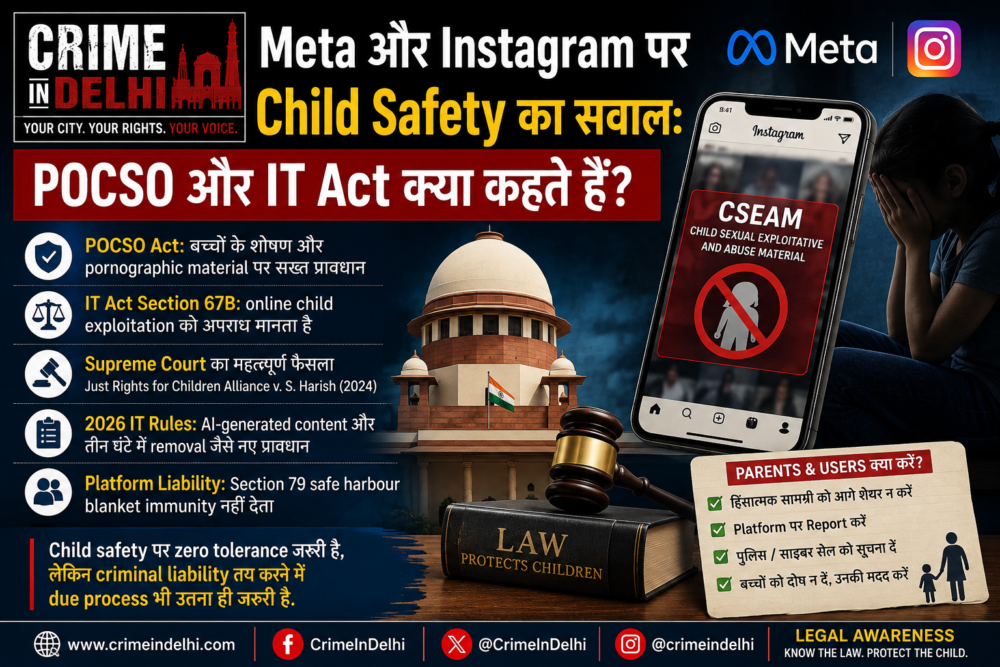
Protection of Children from Sexual Offences Act, 2012 (POCSO) बच्चों को sexual offences और exploitation से protection देने वाला प्रमुख कानून है। बहुत लोगों को लगता है कि POCSO केवल physical sexual assault के मामलों में लागू होता है। ऐसा नहीं है।
POCSO में child को pornographic purposes के लिए use करने, ऐसे material को store करने और उससे संबंधित conduct के लिए अलग provisions मौजूद हैं।
Section 13 — Child का pornographic purposes के लिए use
POCSO की Section 13 child को pornographic purposes के लिए इस्तेमाल करने से संबंधित है। Provision electronic और digital forms को भी address करता है।
Section 15 — Child से संबंधित pornographic material का storage
Section 15 उन परिस्थितियों से संबंधित है जहां कोई व्यक्ति child से जुड़े pornographic material को store या possess करता है।
इस provision में conduct और intention के आधार पर अलग-अलग situations को address किया गया है। इसलिए हर case में केवल यह कहना पर्याप्त नहीं है कि “material device में मिला।” Court को facts, possession, intention और conduct भी देखना पड़ सकता है।
Supreme Court ने इस मुद्दे पर क्या कहा?
इस विषय पर सबसे महत्वपूर्ण judgments में से एक है:
Just Rights for Children Alliance & Anr. v. S. Harish & Ors., 2024 INSC 716
23 September 2024 को Supreme Court ने POCSO की Section 15 और Information Technology Act की Section 67B के scope पर विस्तार से विचार किया। मामला child sexual abuse material के possession/storage और उससे जुड़े आरोपों से संबंधित था।
Supreme Court ने Section 15 के तहत possession, constructive possession, immediate control और requisite mental element जैसे मुद्दों पर विस्तार से चर्चा की। Court ने Section 67B IT Act के scope को भी examine किया।
यह judgment इसलिए महत्वपूर्ण है क्योंकि Supreme Court ने online child sexual exploitation को केवल “objectionable content” मानकर छोड़ने के बजाय उसके गंभीर criminal-law consequences पर विचार किया।
लेकिन यहां एक बहुत important distinction है।
S. Harish judgment का मतलब यह नहीं है कि किसी social-media platform पर unlawful material दिखाई देने मात्र से platform automatically POCSO का accused बन जाएगा।
उस judgment में Court मुख्य रूप से उस व्यक्ति के conduct और statutory offences पर विचार कर रहा था जिसके device से material मिला था। Intermediary या platform liability एक अलग legal question है।
और मेरे हिसाब से यही distinction इस पूरे Meta controversy को समझने के लिए सबसे जरूरी है।
IT Act की Section 67B भी क्यों महत्वपूर्ण है?
POCSO के साथ-साथ Information Technology Act, 2000 की Section 67B electronic form में children को sexually explicit acts या conduct में depict करने वाले material से जुड़े publication, transmission और अन्य specified conduct को address करती है।
इसलिए online child exploitation के किसी मामले में केवल POCSO देखना पर्याप्त नहीं होगा। Facts के आधार पर POCSO + IT Act + intermediary due-diligence framework को साथ पढ़ना पड़ सकता है।
IT Act की Section 67C भी intermediaries द्वारा certain information के preservation and retention से संबंधित है।
अगर किसी को ऐसी सामग्री की जानकारी मिले तो?
POCSO की Section 19 reporting of offences से संबंधित है।
किसी व्यक्ति को POCSO offence होने की जानकारी या apprehension हो तो कानून appropriate police authority या Special Juvenile Police Unit को information देने का framework देता है।
Section 20 कुछ media, studio और photographic facilities के लिए भी reporting obligations रखती है।
Section 21 failure to report के consequences से संबंधित है।
इसका practical message बहुत simple है: ऐसी सामग्री को खुद forward या circulate करके “evidence” बनाने की कोशिश न करें।
अगर कोई suspicious account, advertisement या URL सामने आता है, तो उसे appropriate authority और platform के reporting mechanism के जरिए report करना चाहिए।
अब असली सवाल: Meta जैसे platform की जिम्मेदारी कितनी है?
यहीं से legal analysis थोड़ा complex हो जाता है।
Instagram जैसे platforms पर करोड़ों users content upload करते हैं। इसलिए Indian law हर third-party content के लिए platform को automatically criminally liable नहीं बनाता।
यहीं Section 79 of the IT Act महत्वपूर्ण हो जाता है। Section 79 certain conditions के अधीन intermediary को third-party information, data या communication links के लिए exemption from liability देता है। लेकिन यह protection statutory conditions और due-diligence requirements के अधीन है।
इसलिए दो statements दोनों गलत हो सकती हैं: “Platform पर illegal content आया, इसलिए platform automatically guilty है.” और “Platform intermediary है, इसलिए उसकी कोई responsibility नहीं है.”
कानून इन दोनों extremes के बीच काम करता है।
Safe Harbour का मतलब blanket immunity नहीं है
Section 79 को अक्सर “safe harbour” कहा जाता है। लेकिन safe harbour का मतलब यह नहीं है कि intermediary को हर situation में immunity मिल जाती है।
Section 79 खुद कहता है कि exemption कुछ conditions के अधीन है और intermediary को prescribed due diligence का पालन करना होता है।
Supreme Court ने intermediary liability के context में Section 79 के framework पर पहले भी विचार किया है। Shreya Singhal v. Union of India इस क्षेत्र की foundational authorities में से एक है। बाद के Supreme Court decisions ने भी Section 79 को an exemption provision के रूप में समझाया है।
इसलिए किसी platform की liability तय करते समय हमें यह पूछना होगा: Platform को क्या पता था?, उसे कब पता चला?, उसके बाद उसने क्या action लिया?, क्या उसने अपनी statutory due diligence पूरी की?
और सबसे महत्वपूर्ण— क्या platform की अपनी conduct ने किसी offence के statutory ingredients को satisfy किया?
2026 में AI ने यह सवाल और बड़ा कर दिया है
आज online child safety की problem केवल user-uploaded photographs और videos तक सीमित नहीं है।
AI-generated और synthetically generated content ने legal और regulatory challenges को और complicated बना दिया है।
MeitY ने February 2026 में IT Rules को amend किया। Official MeitY record में 10 February 2026 के amendments specifically Synthetically Generated Information (SGI) से जुड़े हैं।
इस updated framework में child sexual exploitation and abuse material जैसी categories को भी address किया गया है।
अब सवाल केवल यह नहीं है: “किसने content upload किया?” बल्कि यह भी है:
- किसने उसे generate किया?
- किसने उसे modify किया?
- किसने उसे distribute किया?
- किसने उसे promote किया?
- platform ने उसे detect किया या नहीं?
- report मिलने के बाद platform ने क्या action लिया?
Technology बदल रही है, इसलिए legal responsibility की discussion भी अब केवल traditional content moderation तक सीमित नहीं रह सकती।
तीन घंटे वाली removal requirement को समझना भी जरूरी है
Social media पर अक्सर यह बात कही जाती है कि “अब हर illegal content को तीन घंटे में हटाना होगा।” यह statement बहुत broad है।
2026 amendments ने certain circumstances में unlawful information के removal/disablement की timeline को काफी कम किया है। लेकिन “actual knowledge” कैसे प्राप्त होती है और कौन-सी category पर कौन-सा timeline लागू होता है, Rules और उनके specific triggers पर depend करता है। इसलिए हर ordinary user complaint को automatically three-hour legal trigger मानना सही नहीं होगा।
मेरी नजर में legal articles में ऐसी details को simplify करते समय सबसे ज्यादा सावधानी रखनी चाहिए। Short headline के लिए law को गलत तरीके से oversimplify नहीं करना चाहिए।
Meta के मामले में paid advertisements क्यों महत्वपूर्ण हैं?
यह controversy केवल ordinary user-generated posts के बारे में नहीं है। Reports ने paid advertisements पर सवाल उठाए हैं। इससे legal analysis का एक नया layer सामने आता है। अगर कोई advertisement platform के advertising system के जरिए users तक पहुंचता है, तो naturally कुछ questions उठते हैं:
- Advertisement किसने create किया?
- किसने payment किया?
- Platform ने advertisement को approve कैसे किया?
- क्या automated systems ने उसे detect किया?
- क्या platform को पहले से complaints मिली थीं?
- क्या platform ने उसे particular users तक deliver किया?
- Information मिलने के बाद उसने कितनी जल्दी action लिया?
लेकिन यहां भी हमें जल्दबाजी में conclusion नहीं निकालना चाहिए।
Paid advertisement होना अपने आप में Meta की criminal liability साबित नहीं करता।
Authority को फिर भी relevant facts और applicable statutory provisions के ingredients establish करने होंगे।
NCPCR और NHRC की action का क्या मतलब है?
NCPCR ने Meta के खिलाफ inquiry शुरू की है ताकि allegations और platform की handling को examine किया जा सके।
इसके अलावा, NHRC ने Delhi Police Commissioner को summons किया क्योंकि Commission के notice और reminder के बाद उसे investigation/action-taken report नहीं मिली थी।
इन developments से एक बात साफ है: Authorities इस issue को गंभीरता से देख रही हैं।
लेकिन हमें यह भी याद रखना चाहिए: Inquiry का मतलब guilt नहीं होता।
किसी regulatory या statutory authority का inquiry शुरू करना अभी final judicial finding नहीं है।
मेरी नजर में असली legal question क्या है?
मेरी नजर में इस पूरे विवाद को दो अलग questions में देखना चाहिए।
पहला सवाल: क्या child sexual exploitation material का creation, possession, storage या transmission Indian law के तहत serious offence हो सकता है?
इसका जवाब स्पष्ट है। POCSO और IT Act दोनों इस conduct को address करते हैं। Supreme Court का Just Rights for Children Alliance v. S. Harish judgment भी इस legal framework को गंभीरता से interpret करता है।
दूसरा सवाल: क्या platform अपने service पर ऐसा material आने मात्र से automatically criminally liable हो जाता है?
इसका जवाब इतना simple नहीं है। यहां हमें देखना होगा:
Intermediary status + Section 79 + due diligence + knowledge + platform की conduct + applicable IT Rules + evidence.
यही वह जगह है जहां legal accountability और automatic criminal liability के बीच फर्क करना जरूरी है।
मेरी राय में platform accountability क्यों जरूरी है?
Technology companies आज सिर्फ passive notice boards नहीं हैं। उनके algorithms content को recommend करते हैं, advertising systems content को distribute करते हैं और automated systems लाखों pieces of information को process करते हैं।
इसलिए child safety के मामले में platforms से reasonable and effective safeguards की अपेक्षा करना बिल्कुल उचित है। लेकिन दूसरी तरफ, criminal law में हम केवल public outrage के आधार पर liability तय नहीं कर सकते।
Criminal liability के लिए law के ingredients और evidence दोनों जरूरी हैं।
मेरी नजर में सही approach यही है: Child safety पर zero tolerance होना चाहिए, लेकिन criminal liability तय करते समय due process भी उतना ही जरूरी है।
यही balance इस पूरे controversy को legally समझने के लिए सबसे महत्वपूर्ण है।
Parents और users क्या करें?
अगर किसी बच्चे को online ऐसा harmful material दिखाई देता है:
- इसे download करके circulate न करें
- WhatsApp या social media groups में forward न करें
- इसे “proof” के नाम पर दूसरों को न भेजें
- खुद आरोपी की investigation करने की कोशिश न करें
इसके बजाय:
- Platform पर report करें
- Police/cyber authorities को information दें
- जहां safely possible हो, URL, username या account details जैसी non-illicit information note करें
- बच्चे को blame न करें
- जरूरत पड़ने पर professional/legal assistance लें
Suspected CSEAM को circulate करना खुद serious legal consequences पैदा कर सकता है।
Meta और Instagram से जुड़ा यह मामला सिर्फ एक technology company का controversy नहीं है।
यह भारत के सामने एक बड़ा सवाल रखता है: जब technology और children’s safety आमने-सामने आती हैं, तो platform की legal responsibility कितनी होनी चाहिए?
भारत के पास POCSO, IT Act और updated IT Rules के रूप में एक मजबूत statutory framework है। Supreme Court ने भी child sexual exploitation material से जुड़े provisions की गंभीरता को स्पष्ट किया है।
लेकिन किसी platform को सिर्फ इसलिए criminally liable नहीं माना जा सकता कि उसकी service पर unlawful material दिखाई दिया। हमें देखना होगा:
किसने क्या किया?
Platform को क्या पता था?
कब पता था?
उसने क्या action लिया?
उसकी statutory duty क्या थी?
और evidence क्या establish करता है?
यही responsible legal analysis है।
CrimeInDelhi Legal Takeaway
Online child safety सिर्फ content moderation का issue नहीं है। यह POCSO, IT Act, intermediary due diligence, AI regulation और platform accountability के intersection पर खड़ा हुआ legal issue है।
और इस मामले में आगे होने वाली NCPCR inquiry और अन्य regulatory action यह तय करने में महत्वपूर्ण हो सकते हैं कि India platform accountability को किस दिशा में ले जाता है।
यह लेख सामान्य कानूनी एवं public-awareness purposes के लिए है। Meta/Instagram से संबंधित allegations और ongoing inquiries के अंतिम परिणाम competent authorities/courts द्वारा निर्धारित किए जाने हैं।