
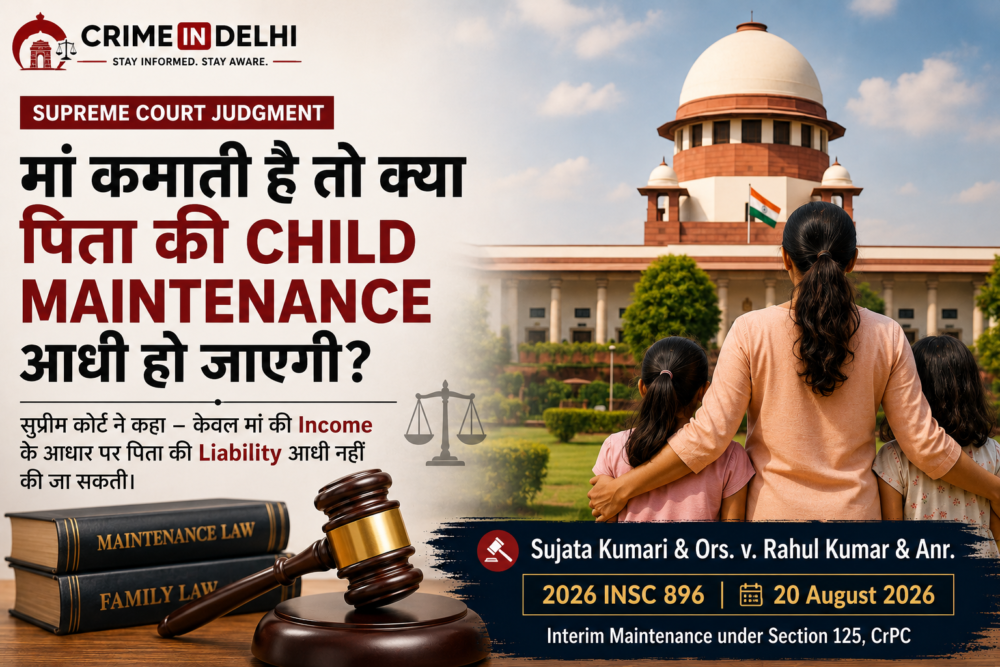
क्या सिर्फ इसलिए कि मां खुद कमाती है, पिता की बच्चों के maintenance की जिम्मेदारी आधी हो जाएगी?
Supreme Court ने कहा—नहीं, केवल mother की income के आधार पर father की child-maintenance liability को mechanically आधा नहीं किया जा सकता।
Court ने स्पष्ट किया कि बच्चों की maintenance दोनों parents की shared responsibility है, लेकिन इसे केवल salary या income को जोड़कर 50:50 में बांटना सही तरीका नहीं है। बच्चों की जरूरतें, parents की financial capacity और यह भी देखा जाएगा कि बच्चे किस parent के साथ रह रहे हैं और उनकी daily care और upbringing कौन कर रहा है।
यह फैसला Sujata Kumari & Ors. v. Rahul Kumar & Anr., 2026 INSC 896 में 20 August 2026 को Supreme Court ने दिया। Bench में Justice Vikram Nath और Justice Sandeep Mehta शामिल थे।
Also Read: Can Personal Law Override POCSO and Child Marriage Laws?
मामला क्या था?
इस मामले में पति-पत्नी दोनों doctors थे और उनकी दो minor daughters थीं, जिनकी उम्र लगभग 9 और 8 वर्ष थी। वैवाहिक विवाद के बाद पत्नी दोनों बेटियों के साथ अलग रहने लगीं। वर्ष 2022 में पत्नी ने Section 125 CrPC के तहत maintenance petition दायर की और अपने तथा बच्चों के लिए ₹2.50 लाख प्रति माह की मांग की।
पत्नी MBBS और DGO qualified gynaecologist थीं और उन्होंने अपनी income लगभग ₹1.50 लाख प्रति माह बताई। पति MBBS और MD qualified paediatrician थे और उन्होंने अपनी income लगभग ₹2 लाख प्रति माह बताई। पत्नी ने हालांकि पति की actual income इससे अधिक होने का दावा किया था।
Family Court ने कितना maintenance दिया?
Family Court ने पत्नी को interim maintenance नहीं दिया, लेकिन दोनों बेटियों के लिए: ₹30,000 प्रति daughter प्रति month
यानी कुल: ₹60,000 प्रति माह का interim maintenance निर्धारित किया।
Allahabad High Court ने amount क्यों घटाई?
पति ने Family Court के order को challenge किया। Allahabad High Court ने maintenance को घटाकर: ₹15,000 प्रति daughter प्रति month कर दिया—यानी दोनों बेटियों के लिए कुल ₹30,000 प्रति माह।
इसके बाद पत्नी और बेटियों ने Supreme Court का रुख किया।
Supreme Court ने क्या फैसला दिया?
Supreme Court ने Allahabad High Court का order set aside कर दिया और Family Court द्वारा तय ₹30,000 प्रति daughter, यानी कुल ₹60,000 प्रति माह, की interim maintenance restore कर दी।
लेकिन इस judgment की असली अहमियत ₹60,000 की राशि नहीं, बल्कि Court की reasoning है।
क्या Working Mother की Income को Court ने Ignore कर दिया?
नहीं। Supreme Court ने यह नहीं कहा कि mother की income maintenance तय करते समय irrelevant है। Court ने कहा कि सिर्फ mother के कमाने के कारण father की liability को आधा नहीं किया जा सकता।
Court ने यह भी देखा कि दोनों बेटियां mother के साथ रहती हैं और mother काम करने के साथ उनकी daily needs और upbringing देख रही हैं। Court के अनुसार, इस care को केवल पैसे में measure नहीं किया जा सकता और यह parent का वास्तविक contribution है।
Also Read: हर टूटा हुआ शादी का वादा Section 69 BNS का अपराध नहीं; Supreme Court ने FIR की रद्द – Judgement Review
Shared Responsibility का मतलब 50:50 नहीं
यह judgment का सबसे important takeaway है। बच्चों की maintenance दोनों parents की shared responsibility है।
लेकिन इसका मतलब यह नहीं है कि: Mother की income + Father की income → फिर खर्च 50:50 divide कर दिया जाए। Court ने साफ किया कि parental obligation को “arithmetic alone” से तय नहीं किया जा सकता।
Maintenance तय करते समय Court को overall circumstances देखनी होंगी—जैसे:
- बच्चों की उम्र और जरूरतें
- education और upbringing का खर्च
- parents की financial capacity
- बच्चे किस parent के साथ रहते हैं
- daily care और upbringing की responsibility कौन निभा रहा है
Supreme Court ने High Court के order में क्या समस्या देखी?
Supreme Court ने ध्यान दिया कि Family Court ने parties के income affidavits और बच्चों के expenses को consider करके ₹30,000 प्रति daughter तय किए थे।
High Court ने Family Court के assessment को perverse या excessive बताकर नहीं हटाया था। इसके बावजूद maintenance को कम करने का मुख्य आधार mother का earning होना था।
Supreme Court ने इस approach को स्वीकार नहीं किया।
Court ने यह भी माना कि father खुद qualified doctor हैं और उनकी disclosed income ₹2 लाख प्रति माह है। दो school-going daughters के education और upbringing को देखते हुए कुल ₹60,000 प्रति माह को Court ने इस particular case में reasonable माना।
Mother की Childcare भी Contribution है
इस judgment का एक महत्वपूर्ण aspect यह है कि Court ने caregiving को भी parental contribution माना। अगर बच्चे mother के साथ रहते हैं और mother:
- काम भी करती है,
- बच्चों की daily needs देखती है,
- उनकी upbringing संभालती है,
तो उसके contribution को केवल salary के आधार पर measure नहीं किया जा सकता।
इसका मतलब यह नहीं है कि mother की income irrelevant है। इसका मतलब केवल इतना है कि financial contribution और caregiving contribution को एक ही mathematical scale पर नहीं रखा जा सकता।
क्या इसका मतलब Father को हमेशा ज्यादा maintenance देना होगा?
नहीं।
यह judgment कोई universal rule नहीं बनाता कि working mother होने के बावजूद father को हर case में ज्यादा maintenance देना ही होगा। Mother की income relevant factor हो सकती है। लेकिन वह एकमात्र factor नहीं है।
हर case में बच्चों की जरूरतें और दोनों parents की financial तथा personal circumstances अलग हो सकती हैं। इसलिए इस judgment को यह कहकर समझना भी गलत होगा कि: “Working mother की income को Court consider ही नहीं करेगी.”
क्या ₹60,000 Final Maintenance है?
नहीं। यह interim maintenance थी।
Supreme Court ने स्पष्ट किया कि main Section 125 CrPC petition अभी Family Court में pending है। Court ने main petition को उसके merits पर independently decide करने का निर्देश दिया और कहा कि इस interim proceeding में दिए गए findings से main case प्रभावित नहीं होना चाहिए।
इसलिए इस case में ₹60,000 को final/permanent maintenance amount नहीं माना जा सकता।
Section 125 CrPC क्यों लागू हुआ?
Maintenance proceedings वर्ष 2022 में Section 125 CrPC के तहत शुरू हुई थीं। Supreme Court के सामने भी यही proceeding थी।
इसलिए इस judgment को BNSS Section 144 का judgment कहना सही नहीं होगा। Supreme Court ने अपने judgment में इसे Section 125 CrPC proceeding के रूप में ही deal किया है।
इस Judgment का Legal Principle क्या है?
Simple language में:
1. दोनों parents responsible हैं.
Children की maintenance shared parental responsibility है।
2. Responsibility का मतलब 50:50 नहीं है.
Income को देखकर automatic mathematical division नहीं किया जा सकता।
3. Mother की income relevant है.
लेकिन केवल उसकी earning के आधार पर father की liability आधी नहीं की जा सकती।
4. Caregiving भी वास्तविक contribution है.
बच्चों की daily care और upbringing को financial contribution से अलग समझना होगा।
CrimeInDelhi Legal Analysis
इस judgment को केवल “Father must pay even if mother earns” कहना oversimplification होगा।
Supreme Court का broader principle यह है कि child maintenance को केवल parents की salary के mathematical ratio से तय नहीं किया जा सकता।
इस particular case में Court ने mother की income को ignore नहीं किया; बल्कि यह माना कि उसकी earning के साथ-साथ बच्चों की daily care और upbringing की responsibility भी relevant है। साथ ही, Court ने father की financial capacity, बच्चों की age, schooling और उनकी overall needs को भी देखा। इसलिए practical takeaway यह है:
Mother का कमाना, अपने-आप में Father की child-maintenance liability को आधा करने का कानूनी formula नहीं है।
लेकिन इसका उल्टा भी सही है—यह judgment father पर हर case में fixed या majority financial burden डालने का universal rule नहीं है।
5 सवालों में Judgment समझिए
क्या working mother होने से father की child maintenance आधी हो जाएगी?
नहीं। केवल mother की income के आधार पर liability automatically आधी नहीं की जा सकती।
क्या mother की income consider होगी?
हाँ। लेकिन यह कई relevant factors में से सिर्फ एक factor है।
क्या दोनों parents की responsibility है?
हाँ। Court ने इसे shared parental responsibility माना है।
क्या ₹60,000 final maintenance है?
नहीं। यह इस case में interim maintenance है।
क्या Supreme Court ने कहा कि father हमेशा ज्यादा maintenance देगा?
नहीं। कोई fixed 50:50 या father-only formula नहीं बनाया गया।
Sujata Kumari & Ors. v. Rahul Kumar & Anr., 2026 INSC 896 का महत्व केवल ₹60,000 की interim maintenance restore करने में नहीं है। इस judgment ने एक practical point स्पष्ट किया है:
बच्चों की maintenance shared parental responsibility है, लेकिन इस responsibility को केवल salary के हिसाब से 50:50 में नहीं बांटा जा सकता।
Mother की income relevant है, लेकिन बच्चों की daily care और upbringing भी वास्तविक parental contribution है। इसलिए “मां कमाती है” अपने-आप में ऐसा कारण नहीं है जिससे पिता की child-maintenance liability mechanically आधी कर दी जाए।
साथ ही, हर maintenance case अपने facts, बच्चों की needs और दोनों parents की financial circumstances पर निर्भर करेगा।
Case Details
Case: Sujata Kumari & Ors. v. Rahul Kumar & Anr.
Neutral Citation: 2026 INSC 896
Court: Supreme Court of India
Bench: Justice Vikram Nath & Justice Sandeep Mehta
Judgment Date: 20 August 2026
Proceeding: Interim maintenance under Section 125, CrPC
Case: Criminal Appeal arising out of SLP (Criminal) No. 9661 of 2026.
Disclaimer: यह article केवल general legal awareness के लिए है और इसे legal advice न माना जाए। किसी specific case में complete facts और applicable law के आधार पर qualified advocate से सलाह लें।
Adv. Ravi | Advocate
Criminal Law • POCSO • Matrimonial & Family Law • Civil Litigation
Legal awareness, judgment analysis & citizens’ rights
CrimeInDelhi