
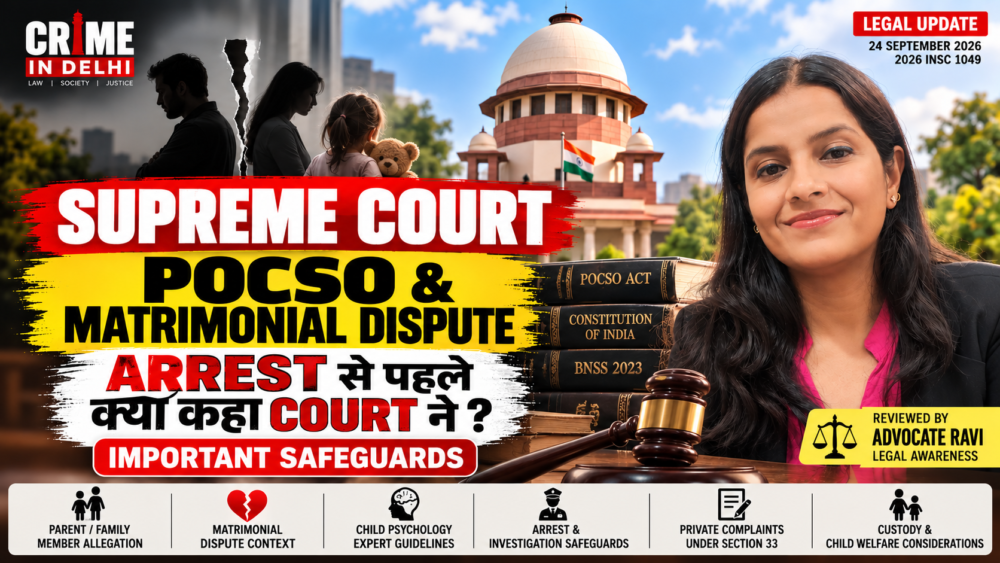
सुप्रीम कोर्ट ने 24 सितंबर 2026 को एक महत्वपूर्ण judgment में उन मामलों के लिए safeguards तय किए हैं, जहां POCSO Act के तहत आरोप किसी parent या ऐसे family member पर हो जो बच्चे के साथ उसी घर में रहता हो और बच्चे के माता-पिता के बीच matrimonial dispute भी मौजूद हो।
फैसला ‘R’ v. ‘E’ & Anr., 2026 INSC 1049 में दिया गया। Court ने इस particular case में POCSO FIR को quash किया और साथ ही ऐसी परिस्थितियों में investigation, arrest और private complaints से जुड़ी प्रक्रिया के लिए safeguards निर्धारित किए।
मामला क्या था?
मामला Bengaluru के एक लंबे matrimonial और child-custody dispute से जुड़ा था। पति-पत्नी के बीच विवाद के बाद custody proceedings शुरू हुईं और Family Court तथा बाद में Karnataka High Court के orders में पिता के पक्ष में custody का निर्णय हुआ।
इसके बाद minor child से जुड़े sexual-abuse allegations के आधार पर 28 मार्च 2024 को POCSO FIR दर्ज हुई। Supreme Court ने मामले की investigation CBI को सौंप दी।
CBI investigation में CCTV footage, statements और child की psychiatric/psychological evaluation सहित विभिन्न materials examine किए गए। CBI report के आधार पर Supreme Court ने पाया कि allegations prosecution के लिए पर्याप्त रूप से स्थापित नहीं थे और FIR को आगे चलाना abuse of process होगा। इसलिए Court ने FIR quash कर दी।
Can Personal Law Override POCSO and Child Marriage Laws?
Supreme Court ने safeguards कब लागू किए?
यह इस judgment का सबसे महत्वपूर्ण हिस्सा है। Safeguards हर POCSO case पर लागू नहीं होंगे।
Court ने दो threshold conditions रखी हैं:
पहली: POCSO offence का आरोप किसी parent या ऐसे family member पर हो जो child victim के साथ उसी roof के नीचे रहता हो।
दूसरी: बच्चे के parents के बीच किसी प्रकार का matrimonial dispute मौजूद हो, चाहे वह dispute किसी court में pending हो या नहीं।
Complaint receive करते समय police officer को यह verify करना होगा कि ऐसा matrimonial dispute मौजूद है।
Arrest के मामले में क्या सावधानी बरतनी होगी?
ऐसे मामलों में FIR दर्ज होने के तुरंत बाद hasty या mechanical arrest नहीं किया जाना चाहिए। Court ने Section 35 BNSS के arrest framework पर विशेष जोर दिया है।
Section 35 के तहत arrest की power होना और उस power का इस्तेमाल करना अलग बातें हैं। Police officer को statutory conditions satisfy करनी होती हैं और relevant circumstances के आधार पर “reason to believe” होना जरूरी है।
Court ने इस संदर्भ में Arnesh Kumar v. State of Bihar और अन्य judgments में विकसित arrest safeguards को भी reaffirm किया।
Also Read: Mother कमाती है तो क्या Father की Child Maintenance आधी हो जाएगी? Supreme Court का बड़ा फैसला
Child Psychology Expert की भूमिका क्या होगी?
जहां ऊपर बताई गई दोनों threshold conditions मौजूद हों, वहां Investigating Officer या Special Juvenile Police Unit (SJPU) को child and adolescent psychiatry/clinical psychology के expert की assistance लेनी होगी।
यह assistance DCPU (District Child Protection Unit) के consultation से ली जाएगी। जहां DCPU उपलब्ध नहीं है, वहां DLSA (District Legal Services Authority) से consultation किया जा सकता है।
Expert की evaluation का उद्देश्य investigation में सहायता करना है। Court ने यह भी कहा कि evaluation:
- POCSO Act और Rules के अनुसार हो;
- बच्चे पर pressure या discomfort न डाले;
- बच्चे को repeated harassment से बचाए; और
- independent manner में की जाए।
यदि CWC द्वारा नियुक्त support person उपलब्ध है, तो वह भी applicable POCSO Rules के अनुसार evaluation के दौरान बच्चे के साथ रह सकता है।
क्या Expert की Report Police के लिए Binding होगी?
नहीं। यह एक महत्वपूर्ण distinction है।
Expert की report केवल investigation में सहायता करने वाला material होगी। Investigating Officer या SJPU report से automatically bound नहीं होगा। Arrest करना है या नहीं, यह decision investigating officer को expert report के साथ अन्य relevant material और circumstances देखकर लेना होगा।
इसी तरह expert report अकेले chargesheet या closure report का आधार नहीं बन सकती। Investigation कानून के अनुसार जारी रहेगी।
क्या कोई Exception है?
हाँ। अगर investigation में material इतना स्पष्ट हो कि expert assistance की आवश्यकता न हो, तो exceptional circumstances में IO/SJPU expert की assistance से dispense कर सकता है।
लेकिन इसके लिए reasons in writing record करने होंगे।
Private POCSO Complaint में भी Safeguard
Court ने safeguards को केवल FIR तक सीमित नहीं रखा।
Section 33 POCSO Act के तहत Special Court के सामने सीधे private complaint आने की स्थिति में भी safeguards लागू होंगे, जब ऊपर बताई गई threshold conditions मौजूद हों।
Special Court को complaint पर judicial mind apply करना होगा और केवल complaint filed होने के आधार पर process या summons जारी नहीं करना चाहिए। Court को prima facie यह देखना होगा कि आगे बढ़ने के लिए sufficient grounds हैं।
ऐसे मामलों में Court को child and adolescent psychiatry/clinical psychology expert की assistance लेकर child की evaluation पर विचार करना होगा।
Exceptional circumstances में, यदि material palpable हो, तो Court reasons record करके expert involvement से dispense कर सकती है।
क्या इसका मतलब POCSO Cases में Arrest पर रोक है?
बिल्कुल नहीं। यह judgment blanket “No Arrest” rule नहीं बनाता।
Court ने केवल एक defined category of cases के लिए additional safeguards निर्धारित किए हैं।
साथ ही, Section 35 BNSS के statutory requirements लागू रहेंगे। Court ने स्पष्ट किया कि arrest की statutory power को routine या mechanical तरीके से इस्तेमाल नहीं किया जाना चाहिए।
Custody पर Court ने क्या कहा?
Supreme Court ने यह भी कहा कि केवल POCSO case register होने से यह automatically नहीं माना जा सकता कि allegation सही है।
यदि ऐसा criminal case child-custody या guardianship proceedings के बीच सामने आता है, तो concerned court को investigation material और पूरे circumstances को देखकर case-by-case prima facie assessment करना होगा।
Court ने यह भी कहा कि POCSO case का registration किसी parent की legitimate custody or guardianship claim को अपने-आप खत्म करने का आधार नहीं बनना चाहिए।
इस मामले में Supreme Court ने क्या आदेश दिया?
इस particular case में Supreme Court ने:
- POCSO FIR No. 76/2024 को quash किया;
- child की legal custody और guardianship पिता ‘R’ के पास रखने का निर्देश दिया;
- physical custody उस समय mother के पास होने को देखते हुए immediate transfer के बजाय reintegration process Family Court, Bengaluru को सौंपा; और
- reintegration में सहायता के लिए एक expert committee का गठन किया।
Court ने यह भी निर्देश दिया कि Family Court child की interim physical custody और visitation arrangements को expert committee की assistance से देखे।
ये Safeguards पुराने Pending Cases पर भी लागू होंगे?
Court ने इसके application को भी स्पष्ट किया है।
Police-report cases: ये safeguards उन मामलों में लागू होंगे जिनकी investigation 24 September 2026 को अभी pending थी।
Private complaints under Section 33 POCSO: safeguards उन मामलों में लागू होंगे जिनमें 24 September 2026 तक summons जारी नहीं हुए थे।
Court ने judgment की copy सभी High Courts और States/UTs के Chief Secretaries को भेजने का भी निर्देश दिया, ताकि इसे criminal courts और police stations तक circulate किया जा सके।
POCSO की Protection कमजोर नहीं हुई
Supreme Court ने अपने judgment में यह स्पष्ट किया कि POCSO Act का मूल उद्देश्य बच्चों को sexual assault, sexual harassment और sexual exploitation से protection देना है।
इसलिए safeguards का उद्देश्य genuine allegations को कमजोर करना नहीं है। Court ने approach को balance के रूप में रखा—एक तरफ child protection और दूसरी तरफ specific circumstances में accused को unwarranted harm से बचाना।
CrimeInDelhi Legal Awareness
इस judgment से दो बातें साथ-साथ समझना जरूरी है:
POCSO allegation बेहद गंभीर है और बच्चे की safety सबसे महत्वपूर्ण है।
लेकिन FIR और guilt एक ही चीज नहीं हैं। Investigation और evidence के आधार पर criminal proceedings आगे बढ़ती हैं।
इसी तरह, इस judgment में बताए गए safeguards हर POCSO case पर लागू नहीं होते। ये केवल Supreme Court द्वारा निर्धारित specific matrimonial-dispute circumstances में लागू होते हैं।
Legal Disclaimer
यह article केवल general legal awareness के लिए है। इसे किसी specific case में legal advice या legal opinion का substitute न माना जाए।
Source: Supreme Court of India, ‘R’ v. ‘E’ & Anr., 2026 INSC 1049, Judgment dated 24 September 2026.
— Advocate Ravi
Legal Awareness | CrimeInDelhi
Full Judgment — Supreme Court decision
Related Legal Guides
Police Notice vs Court Summons Explained