

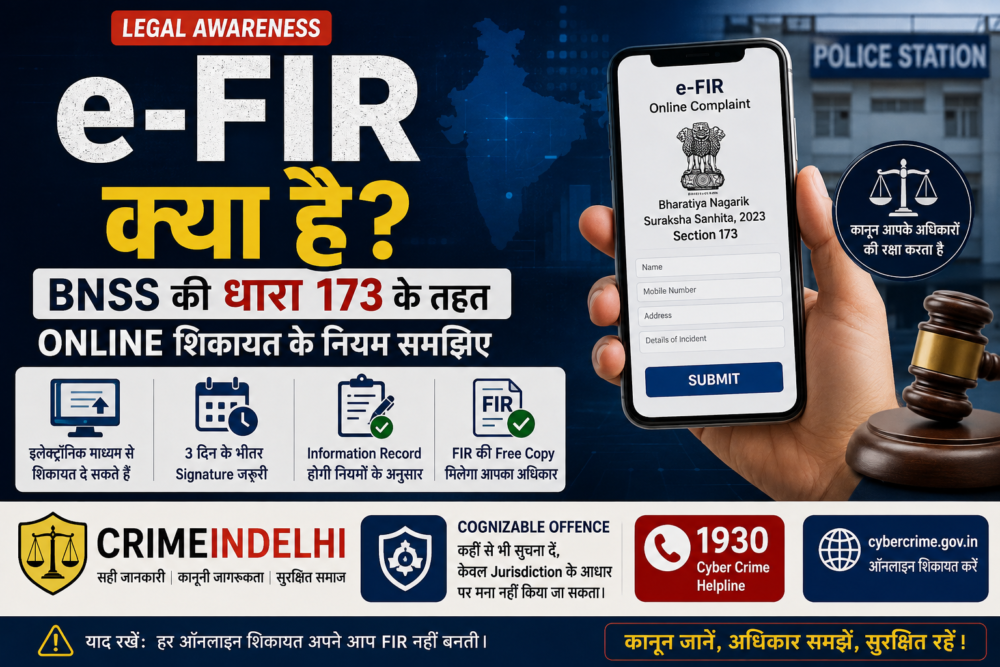
अब किसी cognizable offence की जानकारी देने के लिए हर स्थिति में पुलिस स्टेशन जाकर ही शुरुआत करना जरूरी नहीं है। Bharatiya Nagarik Suraksha Sanhita, 2023 (BNSS) की Section 173 में cognizable offence से संबंधित information को electronic communication के माध्यम से देने का प्रावधान किया गया है।
इस प्रावधान का एक महत्वपूर्ण पहलू यह भी है कि यदि information electronic माध्यम से दी गई है, तो उसे record पर लेने के लिए informant को तीन दिनों के भीतर sign करना होता है।
लेकिन इसका मतलब यह नहीं है कि हर online complaint अपने आप FIR बन जाती है। यह अंतर समझना बेहद जरूरी है।
Section 173 BNSS क्या कहती है?
BNSS की Section 173(1) के अनुसार, cognizable offence के संबंध में information पुलिस स्टेशन के officer in charge को oral या electronic communication के माध्यम से दी जा सकती है।
कानून यह भी स्पष्ट करता है कि offence जिस area में हुआ है, केवल territorial jurisdiction के आधार पर information देने की शुरुआत को रोका नहीं जाना चाहिए।
इसी प्रावधान के कारण electronic reporting और Zero FIR जैसे mechanisms को अधिक स्पष्ट statutory आधार मिला है।
Electronic complaint देने पर 3 दिन में Signature क्यों?
यदि information electronic communication के माध्यम से दी जाती है, तो BNSS के अनुसार informant को उस information पर तीन दिनों के भीतर sign करना होता है।
इसका उद्देश्य electronic communication को विधि के अनुसार record पर लाने की प्रक्रिया को पूरा करना है।
इसलिए केवल online message, email या electronic submission कर देना और उसे automatically registered FIR मान लेना सही नहीं होगा।
क्या Online Complaint और FIR एक ही चीज है?
नहीं, जरूरी नहीं। यह सबसे महत्वपूर्ण distinction है।
किसी व्यक्ति द्वारा online या electronic माध्यम से दी गई information कानून के तहत police तक पहुंच सकती है। इसके बाद applicable legal procedure के अनुसार information को record किया जा सकता है और यदि आवश्यक statutory conditions पूरी होती हैं, तो FIR registration की प्रक्रिया आगे बढ़ती है।
इसलिए: Online complaint ≠ हर स्थिति में automatically FIR और
Electronic information ≠ conviction या guilt का निर्धारण
FIR criminal justice process की शुरुआत का एक महत्वपूर्ण हिस्सा हो सकती है, लेकिन किसी व्यक्ति की guilt का फैसला केवल अदालत करती है।
क्या FIR किसी भी Police Station में दी जा सकती है?
BNSS में cognizable offence की information देने के संबंध में territorial limitation को लेकर महत्वपूर्ण बदलाव किया गया है।
Section 173(1) में स्पष्ट है कि information “irrespective of the area where the offence is committed” दी जा सकती है। यही principle Zero FIR की अवधारणा से जुड़ता है।
यदि किसी व्यक्ति को लगता है कि अपराध किसी दूसरे police station के territorial jurisdiction में आता है, तो केवल इसी आधार पर information देने से मना किया जाना कानून की मंशा के अनुरूप नहीं है।
इसके बाद मामला संबंधित jurisdiction वाले police station को transfer किया जा सकता है।
Electronic FIR और Zero FIR में क्या अंतर है?
दोनों concepts को एक ही समझना सही नहीं होगा।
Electronic reporting
इसमें cognizable offence से संबंधित information electronic communication के माध्यम से police को दी जाती है। Section 173 BNSS इसके लिए statutory framework प्रदान करती है।
Zero FIR
Zero FIR का उद्देश्य यह सुनिश्चित करना है कि territorial jurisdiction के विवाद के कारण criminal information दर्ज करने की प्रक्रिया में अनावश्यक देरी न हो।
इसमें FIR को उस police station पर initiate किया जा सकता है जहां information दी गई है और बाद में इसे संबंधित territorial jurisdiction वाले police station को transfer किया जा सकता है।
Delhi में Cyber Crime के लिए e-Zero FIR का क्या महत्व है?
Delhi में cybercrime complaints के लिए electronic FIR mechanism को लेकर पहले से एक विशेष व्यवस्था विकसित की गई है।
MHA और I4C ने Delhi Police के साथ मिलकर e-Zero FIR mechanism शुरू किया था, जिसके तहत specified cyber financial fraud complaints को NCRP/1930 के माध्यम से process करके Delhi के e-Crime Police Station में Zero FIR के रूप में register किया जा सकता है और बाद में उसे concerned territorial cybercrime police station को भेजा जाता है।
इस व्यवस्था का उद्देश्य cyber financial fraud मामलों में complaint से FIR और आगे की investigation के बीच coordination को तेज करना है।
FIR दर्ज होने के बाद क्या अधिकार हैं?
BNSS Section 173(2) के अनुसार recorded information की copy informant या victim को free of cost दी जानी है।
इसलिए FIR या recorded information की copy मांगना किसी व्यक्ति के लिए महत्वपूर्ण procedural right है।
अगर Police Information लेने से मना करे तो?
यदि किसी cognizable offence की information देने के बावजूद police उसे record नहीं करती, तो BNSS में आगे के statutory remedies उपलब्ध हैं।
ऐसी स्थिति में व्यक्ति को facts और documents सुरक्षित रखते हुए appropriate legal remedy पर विचार करना चाहिए। मामले के facts के अनुसार senior police authorities और competent court के समक्ष उपलब्ध remedies का उपयोग किया जा सकता है।
किसी भी complaint में:
- घटना की तारीख और समय
- स्थान
- आरोपी की उपलब्ध जानकारी
- relevant documents
- photographs/videos
- messages/emails
- financial transaction details
- अन्य relevant evidence
सुरक्षित रखना महत्वपूर्ण है।
CrimeInDelhi Legal Analysis
BNSS के तहत electronic communication और Zero FIR जैसे provisions का उद्देश्य criminal justice system को अधिक accessible, technology-enabled और citizen-centric बनाना है।
लेकिन citizens के लिए सबसे महत्वपूर्ण बात यह समझना है कि online complaint, electronic information और registered FIR अलग procedural concepts हो सकते हैं।
इसलिए किसी website या app पर complaint submit करने के बाद यह सुनिश्चित करना जरूरी है कि complaint किस authority को गई है, क्या information formally record हुई है और क्या FIR number generate हुआ है।
Cyber fraud के मामलों में तो समय और भी महत्वपूर्ण हो सकता है। ऐसी स्थिति में 1930 पर तुरंत report करने और National Cyber Crime Reporting Portal पर complaint दर्ज करने में देरी नहीं करनी चाहिए।
आसान भाषा में समझिए
Cognizable offence हुआ → Police को information दी जा सकती है → Information electronic माध्यम से भी दी जा सकती है → Electronic submission पर 3 दिन के भीतर signature आवश्यक है → लागू प्रक्रिया के अनुसार information record/FIR registration आगे बढ़ता है → FIR की free copy informant/victim को दी जानी है।
CrimeInDelhi Legal Note
Electronic communication के माध्यम से information देने का statutory right होने का अर्थ यह नहीं है कि हर online submission automatically FIR बन जाता है। FIR registration और आगे की investigation लागू कानून और facts के अनुसार होती है।
Source: Bharatiya Nagarik Suraksha Sanhita, 2023; Ministry of Home Affairs; Press Information Bureau, Government of India; Indian Cyber Crime Coordination Centre (I4C).
Disclaimer: यह article general legal awareness के उद्देश्य से है। किसी specific case में available facts और circumstances के आधार पर अलग legal remedy लागू हो सकती है।