
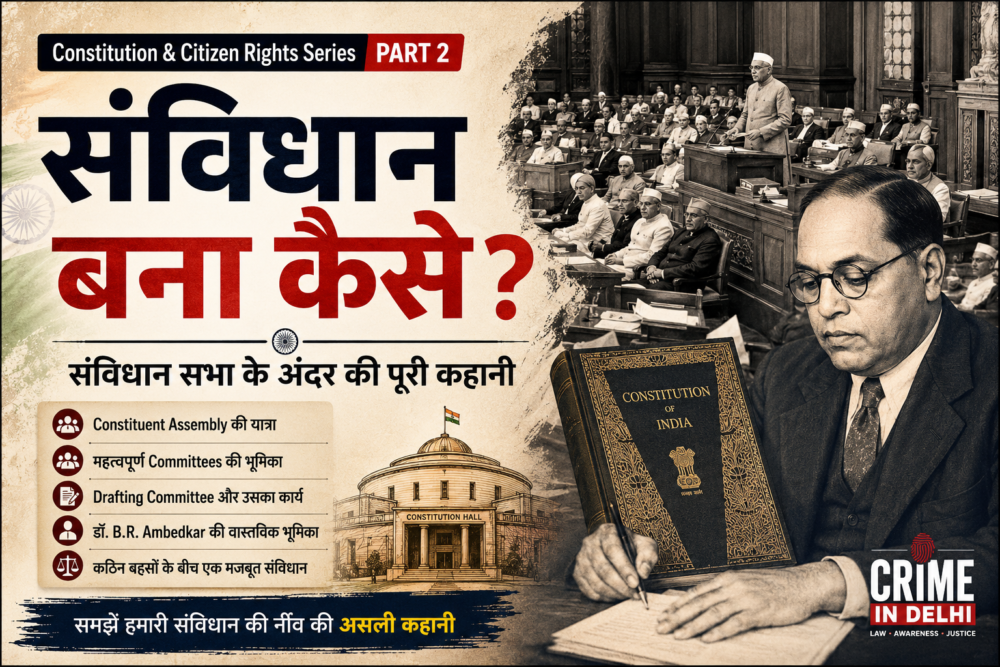
पिछले भाग में हमने समझा कि भारत को संविधान की जरूरत क्यों पड़ी, संविधान सभा की यात्रा कैसे शुरू हुई और आज़ादी के बाद भी भारत के सामने अपना नया constitutional framework तैयार करने की चुनौती क्यों बनी रही।
लेकिन अब असली सवाल है— जिस संविधान को आज हम अपने अधिकारों, सरकार की शक्तियों और लोकतांत्रिक व्यवस्था का आधार मानते हैं, वह आखिर बना कैसे?
- क्या इसे किसी एक व्यक्ति ने लिखा था?
- क्या डॉ. B.R. Ambedkar ने अकेले संविधान तैयार किया?
- या इसके पीछे एक लंबी प्रक्रिया, कई committees, अलग-अलग विचार और महीनों की बहस थी?
इसका जवाब जानने के लिए हमें संविधान सभा के अंदर जाना होगा।
Also Read: Part 1 – हमारे अधिकार आए कहां से? आज़ादी से संविधान तक भारत की संवैधानिक यात्रा
संविधान सभा ने काम कैसे शुरू किया?
Constituent Assembly की पहली बैठक 9 December 1946 को New Delhi के Constitution Hall में हुई थी। लेकिन संविधान का final draft तैयार करने का काम एक साथ शुरू नहीं हुआ।
Assembly ने अलग-अलग constitutional questions पर अलग-अलग committees के माध्यम से काम किया। यह जरूरी भी था क्योंकि एक नए देश का संविधान केवल Fundamental Rights की सूची नहीं हो सकता था।
यह तय करना था कि—
- Centre और Provinces/States के बीच powers कैसे बंटेंगी?
- Legislature की structure क्या होगी?
- Executive कैसे काम करेगी?
- Judiciary की position क्या होगी?
- नागरिकों के Fundamental Rights क्या होंगे?
- Minorities के interests कैसे protect होंगे?
- Tribal और excluded areas का administration कैसे होगा?
इन अलग-अलग सवालों पर committees ने विचार किया और अपनी reports Assembly के सामने रखीं।
इतनी सारी committees क्यों बनीं?
Constituent Assembly ने constitution-making के अलग-अलग हिस्सों के लिए कई committees बनाई थीं।
इनमें प्रमुख थीं—
Union Powers Committee — Centre और Union की powers से जुड़े प्रश्न।
Union Constitution Committee — Union की constitutional structure से जुड़े प्रश्न।
Provincial Constitution Committee — Provinces की constitutional व्यवस्था।
Advisory Committee on Fundamental Rights, Minorities and Tribal and Excluded Areas — Fundamental Rights, minorities और tribal/excluded areas से जुड़े महत्वपूर्ण मुद्दे।
इसके अलावा Rules of Procedure Committee, States Committee, Steering Committee और दूसरी committees भी थीं।
और फिर आई वह committee जिसका नाम आज संविधान निर्माण की चर्चा में सबसे ज्यादा लिया जाता है— Drafting Committee.
Drafting Committee कब बनी?
29 August 1947 को Constituent Assembly ने Drafting Committee नियुक्त करने का निर्णय लिया।
इस committee में B.R. Ambedkar के साथ Alladi Krishnaswami Ayyar, N. Gopalaswami Ayyangar, K.M. Munshi, Mohammed Saadulla, B.L. Mitter और D.P. Khaitan शामिल थे। Dr. B.R. Ambedkar इसके Chairman थे।
लेकिन यहां एक बहुत महत्वपूर्ण बात समझना जरूरी है।
Drafting Committee का मतलब यह नहीं था कि बाकी Assembly ने संविधान लिखना बंद कर दिया था।
Drafting Committee का काम Assembly द्वारा लिए गए decisions और विभिन्न committees की reports के आधार पर constitutional provisions को एक coherent draft का रूप देना था।
खुद Dr. Ambedkar ने 4 November 1948 को Draft Constitution पेश करते हुए बताया था कि Drafting Committee को Assembly की विभिन्न committees के decisions और reports के आधार पर Constitution तैयार करने का काम सौंपा गया था।
यानी प्रक्रिया कुछ ऐसी थी—
Assembly में विचार → Committees में detailed work → Reports और decisions → Drafting Committee → Draft Constitution → फिर Assembly में debate और amendments.
और कहानी यहीं खत्म नहीं होती।
B.N. Rau की भूमिका क्या थी?
संविधान निर्माण की कहानी में एक और महत्वपूर्ण नाम है—
B.N. Rau – वे Constituent Assembly के Constitutional Adviser थे।
1947 में Assembly के committee reports और decisions को एक unified working document में बदलने का काम उनके कार्यालय ने किया। September 1947 में उन्होंने एक draft तैयार करना शुरू किया और October 1947 में Constitutional Adviser’s Draft Constitution सामने आया। यह draft 240 Articles, 25 Parts और 13 Schedules का था।
लेकिन यह final Constitution नहीं था। यह एक working document था, जिसमें Assembly के अब तक के committee decisions और constitutional proposals को एक जगह लाने का प्रयास किया गया था। यही document आगे Drafting Committee के काम का एक महत्वपूर्ण आधार बना।
इसलिए संविधान निर्माण की कहानी को केवल “Ambedkar ने Constitution लिखा” कहकर समाप्त कर देना historical process को बहुत छोटा कर देता है।
फिर डॉ. B.R. Ambedkar की वास्तविक भूमिका क्या थी?
यह शायद इस पूरी कहानी का सबसे महत्वपूर्ण सवाल है। डॉ. B.R. Ambedkar की भूमिका अत्यंत महत्वपूर्ण थी। वे Drafting Committee के Chairman थे।
लेकिन उनका काम केवल किसी तैयार document पर अपना नाम लगाना नहीं था। Drafting Committee को अलग-अलग committees के decisions, Assembly की discussions और constitutional requirements को एक व्यवस्थित constitutional document में बदलना था।
Ambedkar ने इसी प्रक्रिया में committee का नेतृत्व किया और बाद में Draft Constitution को Assembly के सामने formally प्रस्तुत किया।
4 November 1948 को Ambedkar ने Constituent Assembly में Draft Constitution introduce किया। उन्होंने स्पष्ट किया कि Drafting Committee को Assembly के decisions और committees की reports के आधार पर Constitution तैयार करने का दायित्व दिया गया था।
इसलिए Ambedkar की भूमिका को दो extremes में देखना दोनों ही गलत होंगे। यह कहना कि— “संविधान केवल Ambedkar ने बनाया।” पूरी प्रक्रिया को नजरअंदाज करता है।
और यह कहना कि— “Ambedkar की भूमिका केवल नाममात्र की थी।” यह भी historical record के विपरीत होगा।
वास्तविकता यह है कि वे Drafting Committee के Chairman के रूप में Constitution के drafting और refinement process में केंद्रीय भूमिका निभा रहे थे, जबकि final constitutional choices Constituent Assembly की collective deliberation से तय हुईं।
Draft Constitution आया तो क्या Assembly ने उसे तुरंत स्वीकार कर लिया?
नहीं। यहीं से constitution-making की सबसे दिलचस्प प्रक्रिया शुरू होती है। Draft Constitution Assembly के सामने रखा गया। Members ने provisions पर चर्चा की, सवाल उठाए, amendments proposed किए और कई provisions पर disagreement भी हुआ। Drafting Committee को इन discussions और amendments के आधार पर document को लगातार revise करना पड़ा।
Constitution of India की archival record के अनुसार, 4 November 1948 को Ambedkar ने Draft Constitution Assembly के सामने रखा। इसके बाद Assembly ने उस पर व्यापक debate की। यानी Constitution कोई ऐसा document नहीं था जिसे एक बार लिखकर Assembly के सामने रखा गया और फिर vote करके पास कर दिया गया।
वह discussion, disagreement और amendment की प्रक्रिया से होकर गुजरा।
यही लोकतांत्रिक constitution-making की असली कहानी है
आज जब हम Constitution पढ़ते हैं, तो हमें एक final document दिखाई देता है। लेकिन 1946–49 के बीच Assembly के अंदर यह एक evolving document था। किसी provision पर सहमति बनती थी। किसी पर disagreement होता था। किसी provision में amendment आता था।
फिर Drafting Committee उसे constitutional language में व्यवस्थित करती थी। फिर Assembly उसे discuss करती थी। और इस तरह Constitution धीरे-धीरे अपने final form की ओर बढ़ता गया।
Parliament के historical records के अनुसार, Constituent Assembly ने लगभग 2 वर्ष, 11 महीने और 17 दिन काम किया। इस दौरान उसने 11 sessions में काम किया और Draft Constitution पर भी लंबा समय विचार किया।
तो क्या हमारा Constitution किसी एक विचारधारा का परिणाम था?
नहीं। और शायद यही इसकी सबसे महत्वपूर्ण विशेषताओं में से एक है। Assembly में अलग-अलग राजनीतिक, सामाजिक और क्षेत्रीय दृष्टिकोण मौजूद थे। लेकिन Constitution-making का उद्देश्य यह नहीं था कि हर व्यक्ति हर provision पर समान विचार रखे।
उद्देश्य था— मतभेदों के बीच ऐसे constitutional principles पर सहमति बनाना जिनके आधार पर एक स्वतंत्र और लोकतांत्रिक भारत आगे बढ़ सके।
इसीलिए Constitution में Fundamental Rights भी आए, representative government भी, independent judiciary की constitutional structure भी, federal arrangements भी और State की powers पर constitutional limitations भी।
26 November 1949 तक कैसे पहुँचे?
लगभग तीन वर्षों की deliberation, drafting, debate और amendments के बाद Constituent Assembly ने 26 November 1949 को Constitution को adopt किया। लेकिन Constitution की पूरी journey उसी दिन समाप्त नहीं हुई।
कुछ provisions तुरंत लागू हुए और Constitution का अधिकांश हिस्सा 26 January 1950 को लागू हुआ। उस दिन भारत ने अपने नए constitutional order में प्रवेश किया।
और यही वह point था जहां Part 1 की कहानी वापस हमारे सामने आती है— आज़ादी के बाद भारत को केवल सरकार नहीं चलानी थी।
उसे यह भी तय करना था कि—
- सरकार की शक्ति की सीमा क्या होगी?
- नागरिक के अधिकार क्या होंगे?
- और अगर State और citizen के बीच conflict हो, तो संविधान किसकी रक्षा करेगा?
इन सवालों के जवाब Constitution के अलग-अलग हिस्सों में दिखाई देते हैं।
संविधान की कहानी अभी खत्म नहीं हुई
यहां एक बहुत महत्वपूर्ण बात समझना जरूरी है। 26 January 1950 को Constitution लागू होने के साथ constitution-making खत्म हुआ, लेकिन constitutional journey शुरू हुई।
इसके बाद Supreme Court के judgments, constitutional amendments, Parliament की legislation और बदलते सामाजिक हालात ने Constitution के meaning और application को लगातार विकसित किया।
इसीलिए आज जब हम Article 14, Article 19, Article 21 या Article 32 की बात करते हैं, तो केवल 1950 का text पढ़ना पर्याप्त नहीं है। हमें यह भी समझना पड़ता है कि courts ने इन provisions की interpretation कैसे की।
और यही हमारी Constitution & Citizen Rights Series का अगला बड़ा हिस्सा होगा।
आगे की कहानी
अब हम Constitution बनाने की प्रक्रिया से निकलकर Constitution के भीतर मौजूद हमारे अधिकारों की तरफ बढ़ेंगे।
लेकिन उससे पहले एक सवाल हमारे सामने है—
- जिस Constitution ने नागरिकों को Fundamental Rights दिए, उन rights की जरूरत आखिर क्यों पड़ी?
- क्या केवल “equality” लिख देना पर्याप्त था?
- और अगर State किसी नागरिक के साथ भेदभाव करे, तो Constitution उस नागरिक को क्या protection देता है?
यहीं से हमारी अगली कहानी शुरू होगी। क्योंकि संविधान को समझना केवल यह जानना नहीं है कि उसमें क्या लिखा है।
यह समझना भी जरूरी है कि उन शब्दों के पीछे कौन-सी बहस, कौन-से संघर्ष और कौन-सी constitutional सोच थी।
Constitution & Citizen Rights Series — Part 2
Also Read Part 3: सिर्फ “समानता” लिख देना काफी था? संविधान का Article 14 आखिर हमें क्या देता है?
— Advocate Ravi
Legal Awareness | CrimeInDelhi
Disclaimer: यह लेख संविधान निर्माण के ऐतिहासिक और संवैधानिक पहलुओं की सामान्य legal awareness के उद्देश्य से है। इसे किसी individual legal matter में specific legal advice नहीं माना जाना चाहिए।