
Introduction
Drug-related crimes in India are increasing at an alarming rate. The latest 2023 data released by the National Crime Records Bureau (NCRB) shows that cases registered under the Narcotic Drugs and Psychotropic Substances Act, 1985 (NDPS Act) have continued to rise across the country.
In simple words, more people are being caught in cases related to drugs such as ganja, heroin, synthetic drugs, and other narcotic substances. At the same time, law enforcement agencies are conducting more raids and seizures than before.
However, one major question still remains: If arrests and seizures are increasing every year, why are conviction rates still so low?
Also Read: भारत में Cyber Crime ने तोड़े सारे रिकॉर्ड: 2024 में 1 लाख से ज्यादा मामले दर्ज
What Does the NCRB Data Say?
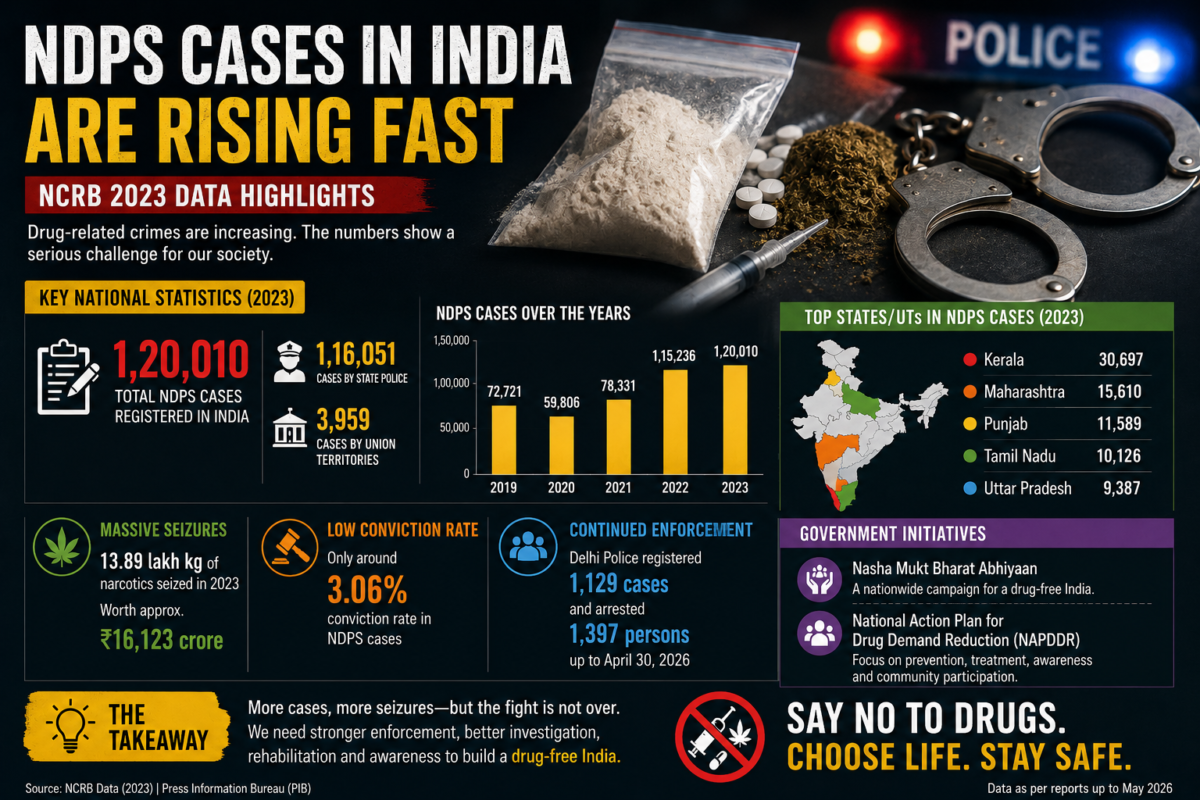
According to the latest NCRB report, a total of 1,20,010 NDPS cases were registered in India during 2023.
This is higher than the numbers recorded in previous years:
| Year | NDPS Cases |
|---|---|
| 2019 | 72,721 |
| 2020 | 59,806 |
| 2021 | 78,331 |
| 2022 | 1,15,236 |
| 2023 | 1,20,010 |
The numbers clearly show that drug-related offences are growing rapidly.
Which States Reported the Highest Cases?
One surprising fact in the report is that Kerala recorded the highest number of NDPS cases in the country in 2023.
Top States in NDPS Cases:
- Kerala – 30,697 cases
- Maharashtra – 15,610 cases
- Punjab – 11,589 cases
- Tamil Nadu – 10,126 cases
- Uttar Pradesh – 9,387 cases
Delhi also continues to see a rise in drug-related cases. According to recent figures, Delhi Police registered more than 1,100 NDPS cases in just the first few months of 2026.
Why Are Drug Cases Increasing?
There is no single reason behind this rise. Experts believe multiple factors are contributing to the problem:
- Easy availability of drugs
- Growing addiction among youth
- Unemployment and social pressure
- Online drug networks and dark web supply chains
- Interstate trafficking gangs
In metro cities, synthetic drugs and party drugs are becoming more common, especially among young users.
What Is the NDPS Act?
The NDPS Act, 1985 is India’s main anti-drug law. It deals with:
- possession of drugs,
- consumption,
- trafficking,
- manufacturing,
- and transportation of narcotic substances.
The law is considered extremely strict. In many cases, getting bail becomes very difficult, especially when commercial quantity of drugs is involved.
Punishment depends on:
- the type of drug,
- quantity recovered,
- and the role of the accused person.
Biggest Concern: Very Low Conviction Rate
Even though thousands of cases are registered every year, the conviction rate in NDPS cases remains extremely low.
Recent reports suggest that the conviction rate is only around 3%.
This means:
- many accused persons remain in jail for long periods,
- but courts ultimately do not convict in a large number of cases.
This raises serious concerns about:
- quality of investigation,
- handling of evidence,
- and procedural mistakes during raids and arrests.
Massive Drug Seizures Across India
The scale of the drug problem becomes even clearer when seizure data is examined.
In 2023:
- around 13.89 lakh kilograms of narcotics were seized across India,
- with an estimated international value of over ₹16,000 crore.
The most commonly seized substances included:
- Ganja,
- Heroin,
- and Poppy Husk.
These numbers show that drug trafficking is no longer a small criminal activity. It has become a large illegal business network operating across states.
Government Action Against Drugs
To tackle the growing drug problem, the government has launched programs such as:
- Nasha Mukt Bharat Abhiyaan
- and the National Action Plan for Drug Demand Reduction (NAPDDR).
These programs focus on:
- awareness,
- rehabilitation,
- counselling,
- and stronger enforcement.
However, experts believe enforcement alone cannot solve the issue permanently.
The Real Problem Goes Beyond Arrests
Drug abuse is not only a policing issue. It is also connected with:
- mental health,
- unemployment,
- peer pressure,
- family problems,
- and lack of awareness.
Simply increasing arrests may not reduce addiction unless rehabilitation and prevention are taken seriously.
At the same time, strict laws must be balanced with fair investigation and protection of legal rights.
Conclusion
The NCRB 2023 data sends a clear warning: drug-related crimes are increasing rapidly across India. While enforcement agencies are making more seizures and arrests, low conviction rates and rising addiction levels show that the problem is far from under control.
India’s fight against drugs cannot depend only on police action. Long-term solutions require awareness, rehabilitation, stronger investigation, and social support systems—especially for young people.
Without addressing the root causes, the narcotics problem may continue to grow despite strict laws and large-scale enforcement.
Advocate Ms Ravi – Delhi Courts
(Independent Legal Analyst)