
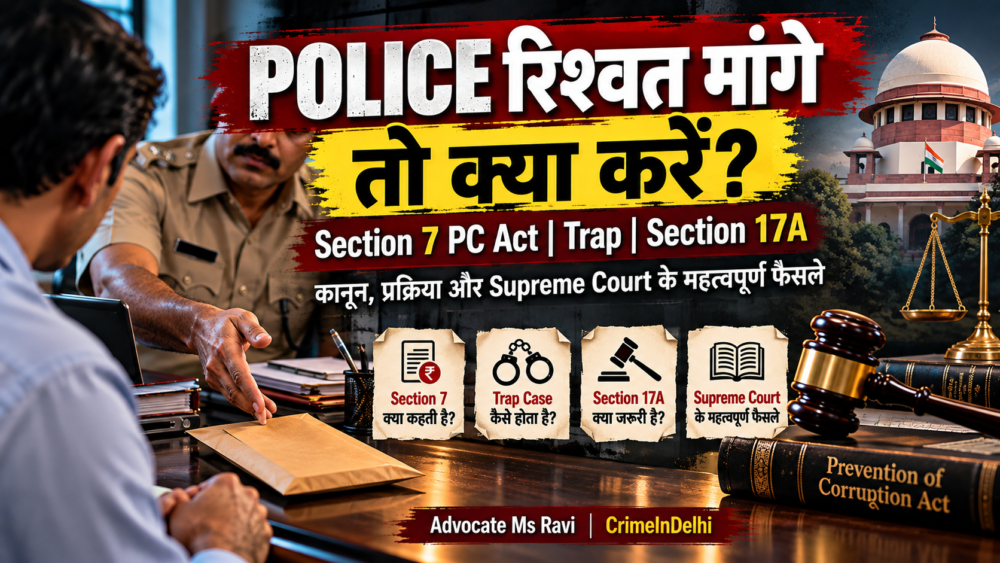
Police ने रिश्वत मांगी तो कौन-सा कानून लगेगा? Section 7, Trap और Section 17A समझिए
किसी पुलिस अधिकारी या अन्य public servant द्वारा रिश्वत मांगना केवल departmental misconduct का मामला नहीं हो सकता। परिस्थितियों और उपलब्ध evidence के आधार पर Prevention of Corruption Act, 1988 के तहत criminal proceedings भी हो सकती हैं। Section 7 public servant द्वारा undue advantage लेने, प्राप्त करने या लेने का प्रयास करने से संबंधित मुख्य provision है।
लेकिन हर रिश्वत के आरोप का legal outcome एक जैसा नहीं होता। Supreme Court ने कई judgments में यह स्पष्ट किया है कि demand, acceptance/obtainment और अन्य foundational facts को कानून के अनुसार establish करना महत्वपूर्ण है। इसी वजह से trap cases में evidence की भूमिका बेहद महत्वपूर्ण हो जाती है.
₹500 या ₹5 लाख—क्या रिश्वत की रकम से कानून बदलता है?
नहीं। Section 7 में कोई fixed minimum bribe amount जैसे ₹500 या ₹5 lakh prescribed नहीं है। इसलिए रिश्वत की रकम को statutory threshold की तरह समझना गलत होगा। कानून का focus undue advantage और उससे जुड़े statutory ingredients पर है।
यही वजह है कि किसी video या social-media post में “₹500 से ₹5 lakh तक” को legal threshold की तरह प्रस्तुत करना सही नहीं होगा।
Section 7 PC Act क्या कहता है?
Section 7 public servant द्वारा अपने लिए या किसी अन्य व्यक्ति के लिए undue advantage obtain, accept या attempt करने से संबंधित offence को address करता है, जब वह किसी official act के संबंध में statutory conditions के भीतर आता है।
इसलिए उदाहरण के तौर पर—
- किसी official काम के बदले पैसे मांगना;
- किसी व्यक्ति को official favour देने या नुकसान से बचाने के बदले undue advantage लेना;
- किसी दूसरे व्यक्ति के माध्यम से undue advantage हासिल करने की व्यवस्था करना;
जैसे facts investigation में महत्वपूर्ण हो सकते हैं।
लेकिन केवल यह आरोप लगा देना कि “अधिकारी ने रिश्वत मांगी” अपने-आप conviction नहीं बनाता। Evidence और statutory ingredients अलग-अलग स्तरों पर establish करने होते हैं।
Supreme Court: Demand और Acceptance क्यों महत्वपूर्ण हैं?
इस क्षेत्र में सबसे महत्वपूर्ण judgments में से एक है:
Neeraj Dutta v. State (Government of NCT of Delhi)
(2023) 4 SCC 731
Constitution Bench ने corruption prosecution में demand और acceptance/obtainment के proof से संबंधित principles को स्पष्ट किया। Court ने यह भी माना कि appropriate circumstances में demand को केवल direct oral evidence से ही नहीं, बल्कि legally admissible circumstantial evidence से भी establish किया जा सकता है.
इसका मतलब यह नहीं है कि recovery of money alone automatically conviction सुनिश्चित कर देती है।
Court को पूरे evidence और circumstances को कानून के अनुसार evaluate करना होता है।
Trap Case क्या होता है?
जब किसी public servant द्वारा रिश्वत मांगने की specific complaint सामने आती है, तो Anti-Corruption authorities कानून के अनुसार verification और trap proceedings कर सकती हैं।
Delhi Government के Directorate of Vigilance के अनुसार Anti-Corruption Branch specific complaints पर trap/raid proceedings कर सकती है और prescribed procedure के अनुसार complainant तथा panch witness आदि की सहायता से कार्रवाई की जाती है।
Broadly, मामला इस तरह आगे बढ़ सकता है:
Complaint → Verification → Legal procedure → Trap → Evidence/Recovery → Investigation → Prosecution
लेकिन किसी व्यक्ति को खुद से trap करने या अधिकारी को उकसाने की कोशिश नहीं करनी चाहिए। ऐसे मामलों में competent Anti-Corruption authority से संपर्क करना उचित है।
Section 20: क्या कानून रिश्वत के मामलों में Presumption देता है?
हाँ, लेकिन यह point बहुत carefully समझना जरूरी है। Section 20 PC Act certain trials में statutory presumption provide करता है, जब prosecution relevant acceptance/obtainment/attempt foundational facts को prove कर देती है।
इसलिए: सिर्फ complaint = Section 20 presumption नहीं।
पहले कानून के अनुसार आवश्यक foundational facts का proof जरूरी है।
इसी principle को Supreme Court ने बाद के judgments में भी discuss किया है।
Dileepbhai Nanubhai Sanghani: केवल administrative irregularity काफी नहीं
Dileepbhai Nanubhai Sanghani v. State of Gujarat – 2025 INSC 280
इस मामले में Supreme Court ने corruption allegations के context में यह देखा कि investigation material में appellant के खिलाफ demand या acceptance of bribe का आवश्यक material मौजूद था या नहीं।
Court ने कहा कि केवल policy deviation या alleged misuse of authority, बिना necessary material showing demand/acceptance of illegal gratification, अपने-आप Prevention of Corruption Act के criminal charges को sustain करने के लिए पर्याप्त नहीं है।
इस judgment ने एक महत्वपूर्ण distinction सामने रखा: Administrative irregularity और corruption offence हमेशा एक ही चीज नहीं होते।
Section 17A: क्या public servant को investigation से पहले protection मिलती है?
Section 17A PC Act कुछ circumstances में public servant के खिलाफ enquiry, inquiry या investigation के लिए previous approval की requirement रखता है, जब alleged offence उसके official functions में की गई recommendation या decision से relatable हो।
लेकिन Section 17A में महत्वपूर्ण statutory proviso भी है।
जहां व्यक्ति को on the spot undue advantage accept या attempt to accept करते हुए arrest किया जाता है, वहां ऐसी prior approval की requirement नहीं होती। इसलिए Section 17A को blanket immunity समझना सही नहीं है।
Police officers के खिलाफ bribery case में Supreme Court का महत्वपूर्ण फैसला
Surendra Dhariwal v. State of Rajasthan – 25 August 2025
इस मामले में allegations police officials के खिलाफ थे। FIR में आरोप था कि investigation के दौरान complainant से पैसे की demand की गई थी और उसके seized belongings वापस करने के लिए भी पैसे मांगे गए।
Rajasthan High Court ने FIR quash करते हुए Section 17A का आधार लिया था।
Supreme Court ने उस order को set aside करके matter को fresh consideration के लिए वापस भेज दिया और Section 17A के application को लेकर महत्वपूर्ण observations किए।
यह judgment इसलिए relevant है क्योंकि यह दिखाता है कि: हर corruption allegation में Section 17A को automatically shield की तरह इस्तेमाल नहीं किया जा सकता।
2026 का महत्वपूर्ण Supreme Court judgment: K. Rangayya
और यही हमारे article का current-news hook होगा।
The State by Lokayuktha Police v. Sri K. Rangayya & Anr. – 2026 INSC 574 — Supreme Court, 26 May 2026
मामले में accused एक Police Sub-Inspector था। आरोप के अनुसार complainant का vehicle और mobile phone police ने seize किया था। बाद में vehicle वापस कराने के संबंध में एक private person ने ₹50,000 की demand allegedly police officer के behalf और instructions पर की।
High Court ने FIR quash करते हुए मुख्य रूप से यह reasoning अपनाई थी कि accused officer ने personally demand नहीं की और पैसे personally accept नहीं किए थे.
लेकिन Supreme Court ने इस approach को स्वीकार नहीं किया।
Court ने Section 7(a) के scope को देखते हुए यह महत्वपूर्ण बात examine की कि undue advantage public servant के लिए या किसी अन्य व्यक्ति के लिए obtained किया जा सकता है। इसलिए केवल यह तथ्य कि money officer के हाथ में personally नहीं आया, अपने-आप prosecution को समाप्त नहीं करता।
Supreme Court ने High Court का quashing order set aside किया और proceedings को आगे बढ़ने दिया, जबकि यह भी स्पष्ट किया कि observations prima facie stage तक सीमित हैं।
इसका practical meaning क्या है?
अगर allegation यह है कि public servant ने— “पैसा मेरे हाथ में मत दो, फलां व्यक्ति को दे दो”
या किसी intermediary/subordinate के माध्यम से undue advantage लेने की व्यवस्था की, तो केवल “officer ने personally पैसा नहीं लिया” कहकर मामला समाप्त नहीं हो जाता।
लेकिन फिर भी prosecution को case के statutory ingredients और evidence को कानून के अनुसार establish करना होगा।
अगर रिश्वत की demand की जाए तो क्या करें?
सबसे महत्वपूर्ण बात: खुद से कोई illegal trap या confrontation न करें।
इसके बजाय:
1. Complaint की details सुरक्षित रखें
Date, time, place, officer का designation और demand का context note करें।
2. Available evidence preserve करें
Messages, original recordings, documents, call details आदि को बिना manipulation के preserve करें।
3. Evidence को edit या fabricate न करें।
4. Competent Anti-Corruption authority से संपर्क करें।
Delhi में Government की Anti-Corruption Branch के लिए 1031 anti-corruption helpline उपलब्ध है। Delhi Government की current website भी bribery complaints के लिए ACB/Vigilance channels बताती है।
Delhi Directorate of Vigilance का online Vigilance Complaint Information Management System (VCIMS) भी corruption-related complaints/information के लिए उपलब्ध है।
एक शिकायत और conviction में अंतर समझना जरूरी है
यह सबसे important legal-awareness point है।
Complaint → FIR → Investigation → Charge → Trial → Conviction/Acquittal
इन सभी stages के अलग-अलग legal standards होते हैं।
इसलिए किसी police officer के खिलाफ bribery complaint या FIR का मतलब यह नहीं है कि उस officer को court ने दोषी घोषित कर दिया है। इसी तरह, FIR quash न होना भी conviction नहीं है।
Prevention of Corruption Act में रिश्वत के मामलों को केवल “पैसा पकड़ा गया या नहीं” के सवाल तक सीमित करके देखना सही नहीं है।
Section 7, demand/acceptance or obtainment, Section 20 presumption, admissible evidence और Section 17A जैसे provisions को साथ पढ़ना जरूरी है।
Supreme Court के Neeraj Dutta, Dileepbhai Nanubhai Sanghani, Surendra Dhariwal और 2026 के K. Rangayya decisions यह दिखाते हैं कि corruption cases में foundational facts, evidence और exact factual circumstances महत्वपूर्ण भूमिका निभाते हैं.
Legal awareness का सबसे important point यही है: रिश्वत की demand को “normal” मानकर ignore करना जरूरी नहीं है—लेकिन शिकायत करते समय कानून के अनुसार सही authority और procedure follow करना equally important है।
Legal Disclaimer: यह article सामान्य legal awareness के लिए है और किसी specific case में legal advice का substitute नहीं है।