

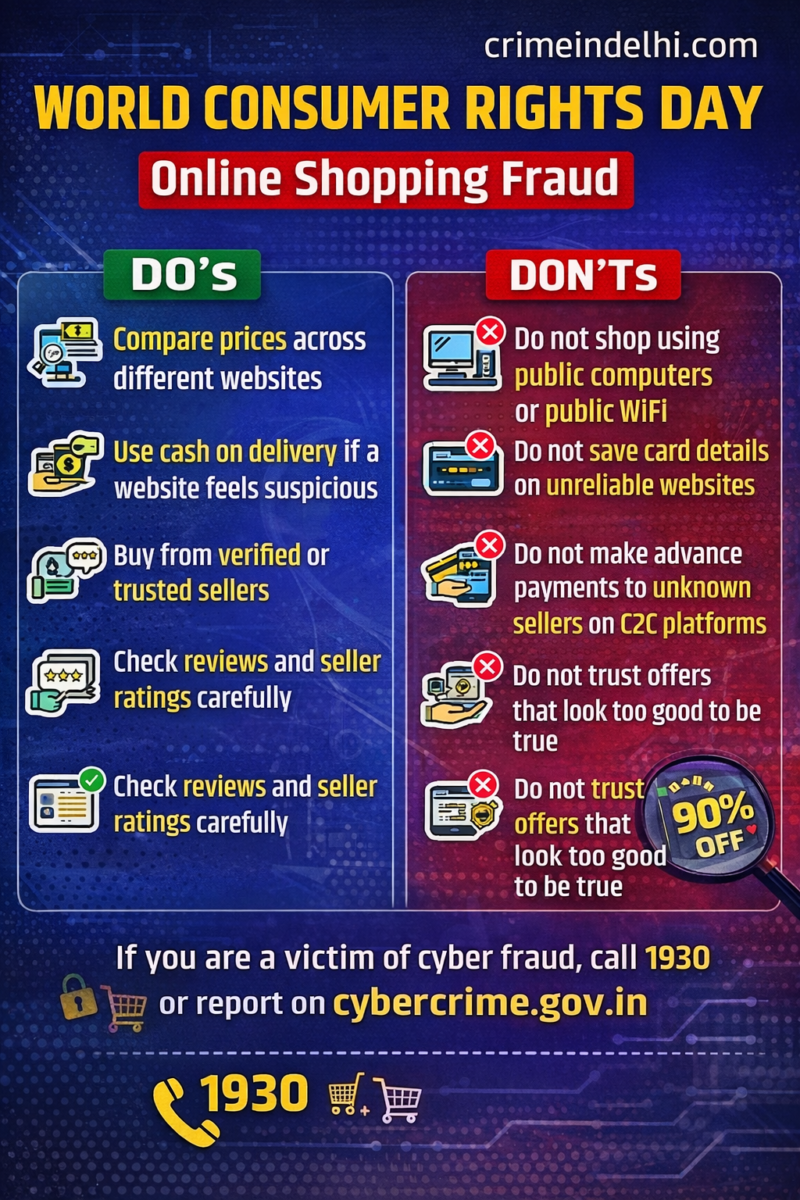
On the occasion of World Consumer Rights Day, authorities have issued an important advisory warning citizens about the growing risk of online shopping fraud. With the rapid rise of e-commerce platforms and digital payments, cybercriminals are increasingly targeting consumers through fake websites, fraudulent sellers, and misleading online deals.
Cyber security agencies have urged people to stay alert while shopping online and to follow safe practices to protect their money and personal information.
The advisory was shared as part of a public awareness campaign led by the Indian Cyber Crime Coordination Centre under the Ministry of Home Affairs, highlighting common online shopping scams and how consumers can avoid them.
How Online Shopping Frauds Happen
Cyber fraudsters often exploit the popularity of online shopping by creating fake websites, posing as genuine sellers, or advertising extremely attractive deals on social media platforms.
In many cases, consumers are lured by unusually low prices and are asked to make advance payments for products that are never delivered. Fraudsters may also steal personal and financial information through malicious websites.
Authorities warn that such scams have increased significantly as more people rely on online shopping for daily purchases.
Also Read: Can Police Check Your Phone Without Permission in India?
Safe Online Shopping: What Consumers Should Do
Experts advise consumers to follow a few basic precautions before making online purchases.
Compare Prices Across Websites
Consumers should compare prices across multiple websites before purchasing a product. Extremely low prices may indicate a potential scam.
Use Cash on Delivery if the Website Feels Suspicious
If a website appears unfamiliar or suspicious, choosing cash on delivery (COD) can help reduce the risk of financial loss.
Buy Only From Trusted Sellers
Purchasing products from verified sellers or trusted platforms significantly reduces the chances of fraud.
Check Reviews and Seller Ratings
Before placing an order, consumers should carefully review seller ratings, customer feedback, and product reviews.
Never Share OTP or Passwords
Consumers should never share OTPs, PINs, or passwords with anyone claiming to process refunds or verify transactions.
Also Read: क्या पुलिस रात में महिला को गिरफ्तार कर सकती है? | Can Police Arrest a Woman at Night in India?
Important Things Consumers Should Avoid
Cyber security authorities also highlighted several practices that consumers should avoid while shopping online.
Avoid Using Public Wi-Fi for Online Shopping
Shopping through public computers or unsecured Wi-Fi networks can expose sensitive data to hackers.
Do Not Save Card Details on Untrusted Websites
Saving debit or credit card details on unreliable platforms may lead to unauthorized transactions.
Do Not Pay Unknown Sellers in Advance
Advance payments to unknown sellers, especially on C2C platforms, can be risky.
Avoid Scanning QR Codes to Receive Money
Fraudsters often trick victims into scanning QR codes, falsely claiming it will help them receive money. In reality, scanning such codes may result in money being deducted.
Be Careful of “Too Good to Be True” Offers
Unrealistically attractive deals are one of the most common tactics used by cybercriminals.
Read Also: Can Police Arrest Without a Warrant in India?
What To Do If You Become a Victim
If someone becomes a victim of an online shopping scam or any cyber fraud, authorities recommend taking immediate action.
Victims can report cyber fraud by calling the National Cyber Crime Helpline 1930 or filing a complaint through the official portal www.cybercrime.gov.in.
Prompt reporting increases the chances of recovering lost money and helps authorities track cybercriminals.
Rising Need for Cyber Awareness
Experts emphasize that consumer awareness is the most effective defense against online fraud. By staying informed and practicing safe online habits, consumers can significantly reduce their risk of falling victim to cybercrime.
As online shopping continues to grow across India, authorities urge citizens to remain vigilant and follow secure digital practices.
Other Articles:
Your Arrest Rights: “Know what happens after an arrest under the new criminal laws”
For police interrogation: “Your legal rights during police questioning”
For more crime news and legal awareness articles, stay connected with CrimeInDelhi.com.