

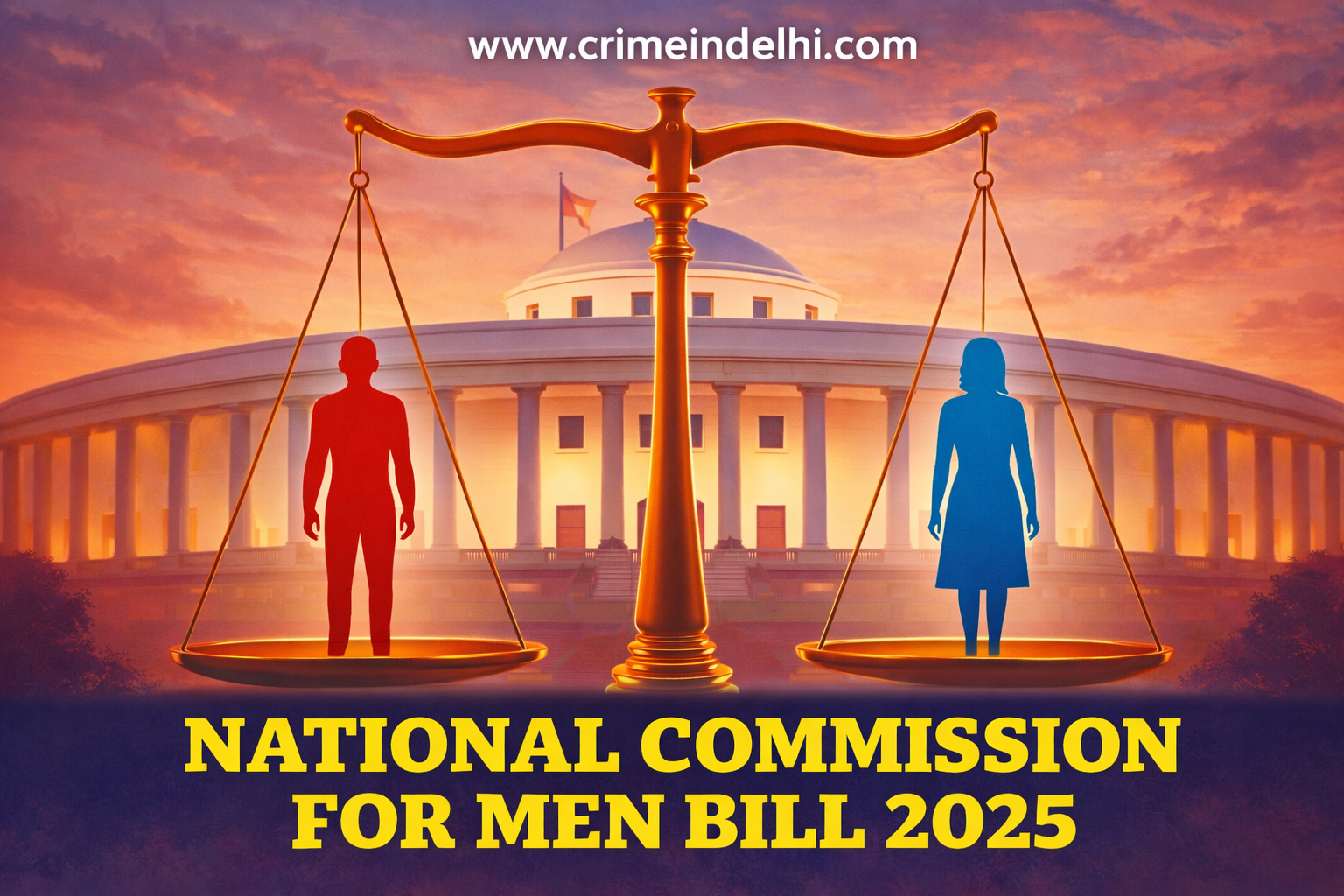
The National Commission for Men Bill, 2025, was recently introduced in the Rajya Sabha. It aims to create a dedicated body to address men’s issues, especially where men feel they are unfairly treated or wrongly accused.
Why is this Bill needed?
While there are laws and institutions protecting women, there’s no formal system to support men facing legal or social hardships. Examples include:
-
False accusations under dowry harassment laws (Section 498A/85 IPC/BNS)
-
Family disputes or custody battles
-
Mental health challenges related to social stigma
This Bill also comes after important judgments like Arnesh Kumar v. State of Bihar (2014). In that case, the Supreme Court warned against automatic arrests under Section 498A/85, emphasizing that the police must follow proper procedures to protect innocent family members. The Bill aims to address similar concerns on a larger scale.
Key Features in Simple Terms
-
A Statutory Commission for Men: A central body under the Ministry of Law and Justice with a chairperson and expert members to look into men’s issues.
-
Fair Legal Process:
-
Mandatory checks before arrests under Section 498A/85
-
Making certain offences bailable and compoundable
-
Strict penalties for false complaints
-
-
Gender-Neutral Protection: Laws on domestic violence, workplace harassment, and sexual offences could become gender-neutral, protecting men from false allegations while keeping genuine safeguards.
-
Family Law Reforms: Shared parenting by default after separation, unless abuse is proven and Penalties for parental alienation.
-
Fast-Track Courts: Special courts to resolve disputes within six months, ensuring quick justice in custody and false allegation cases.
-
Media and Social Media Accountability: Prevents media trials and holds social platforms responsible for spreading unverified allegations.
-
Funding and Structure: ₹3,650 crore over five years to run the Commission and implement reforms.
What It Means for You
If bill is passed, this Commission would provide men a platform to raise grievances, ensure fair treatment in legal matters, and combine legal safeguards with welfare support. It aims for justice without bias, protecting men from misuse of laws while keeping protections for genuine victims intact.
Critics’ Concerns
Critics of the National Commission for Men Bill, 2025, have raised several concerns. Some argue that by introducing stricter procedures and safeguards for men, the Bill could make it harder for genuine complaints by women to be filed and acted upon. There is also a fear that making certain laws gender-neutral or focusing on men’s protections might dilute the existing legal safeguards for women, particularly in cases of domestic violence or harassment.
Additionally, while the Bill proposes shared parenting as the default after separation, opponents caution that this could harm abuse victims or children if proper safeguards are not in place. Finally, since this is a Private Member’s Bill, it faces the challenge of gaining sufficient support in Parliament to become law, meaning that its proposals may or may not be implemented.
Conclusion:
The National Commission for Men Bill, 2025, seeks to balance justice by protecting men from false accusations and unfair legal processes while promoting gender-neutral safeguards. It aims to provide a dedicated platform for grievances, faster legal remedies, and reforms in family and criminal laws, but its success will depend on careful implementation and legislative approval.