

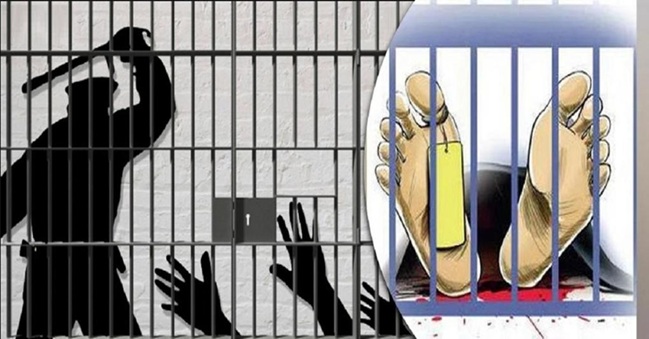
“When a person enters police custody, the law promises protection—but reality often tells a different story.”
Introduction
The recent judgment in the Sathankulam custodial death case has once again brought custodial violence into focus. The conviction of police officials appears to be a strong step towards accountability. However, a larger and more pressing question still remains:
If the law is already strict, why do custodial deaths continue to occur?
In my view as an advocate, the issue is not the absence of law—it is the failure to enforce it properly.
Also Read: Sathankulam Custodial Death Case: A Rare Assertion of Accountability Against Police Excess
Not an Isolated Incident, but a Pattern
Custodial deaths no longer appear as rare or exceptional incidents. Reports continue to emerge from different states, often with similar facts—allegations of assault, denial of responsibility, and delayed action.
A recent incident in Delhi involved a death in police custody where authorities recorded statements of multiple persons, including police officials, during the investigation. Such cases raise serious concerns about what actually happens inside police stations and how accountability is fixed.
In several instances, families approach courts to ensure that authorities register FIRs against police officials.
This clearly shows that the problem is not isolated—it is structural.
Legal Framework Exists — But Is It Enforced?
India already provides a comprehensive legal framework to address such offences:
- Murder (Section 302 IPC / Section 103 BNS)
- Custodial safeguards laid down in D.K. Basu vs State of West Bengal
- Compensation principles recognised in Nilabati Behera vs State of Orissa
- Protection of life and liberty under Article 21 of the Constitution
Despite this, violations continue.
Available data trends show that custodial deaths occur every year, yet authorities secure limited accountability and convictions.
The position remains clear: Laws exist, but authorities do not enforce them consistently.
The Reality at Ground Level
From a practical perspective, the situation appears far more serious than what judgments alone reflect.
- Authorities often delay FIRs against police officials
- Families face resistance at the initial stage
- The same department retains control over key evidence
- Independent investigation does not begin immediately
In many cases, families struggle even to initiate proper legal proceedings.
Where the System Fails
In my view, the system does not fail by accident—it fails structurally.
- Lack of Immediate Accountability: Departments often allow police officials to examine their own colleagues.
- Delay in FIR Registration: Courts frequently intervene to ensure basic compliance.
- Control Over Evidence: Authorities retain custody records and related documentation.
- Non-Compliance with Safeguards: Officials do not strictly follow established guidelines.
- Power Imbalance: Victims’ families face the full force of State machinery.
This creates a situation where justice depends on intervention, not process.
Access to Justice: A Serious Concern
Access to justice remains a major challenge in such cases.
- Many families lack financial resources
- Legal awareness remains limited
- Effective pro bono representation is rarely available in serious custodial matters
As a result, several cases fail to reach courts in a meaningful manner.
This leads to a harsh reality: Serious violations often remain unchallenged due to lack of legal support.
My Perspective as an Advocate
In my view, judgments like Sathankulam play an important role, but they do not resolve the larger issue. They ensure accountability in individual cases. However, they do not guarantee systemic change.
Unless authorities:
- register FIRs promptly
- conduct independent investigations
- strictly implement safeguards
such judgments will remain exceptions rather than the norm.
Conclusion
Custodial death is not merely a criminal offence—it directly violates constitutional guarantees.
The real issue is not whether laws exist.
The real issue is whether authorities enforce them without delay, bias, or resistance.
If enforcement remains weak, even the strongest legal provisions will fail to protect individuals in custody.
As an advocate, I firmly believe that accountability must begin at the very first stage—otherwise, justice becomes reactive rather than preventive.
Written by Advocate Ravi
Practising at Delhi Courts
Law, Rights & Reality — Custodial Justice Series
Focused on law, accountability, and institutional failures.